
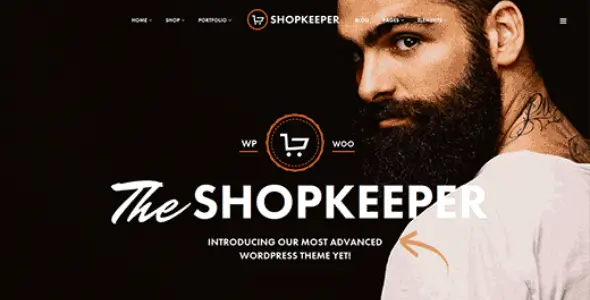
Shopkeeper is built for conventional WooCommerce stores that need strong visual merchandising without turning every page into a custom development job. Fashion, furniture, cosmetics, accessories, lifestyle goods, and compact brand catalogs are the obvious fit. It also works for portfolio-led businesses and catalog-only sites where checkout is intentionally disabled.
Its main advantage is restraint. Product grids, galleries, typography, and navigation receive more attention than elaborate marketplace mechanics. Compared with feature-heavy “all-in-one” themes, Shopkeeper feels closer to a polished storefront layer over WooCommerce. That makes it approachable for client work, although some bundled convenience comes at the cost of a lean, block-native stack.
The Useful Parts Behind the Shop Window
- Native WooCommerce integration covers product archives, variable products, carts, checkout screens, account pages, and standard extension workflows.
- Elementor support provides a familiar visual editing route for landing pages and campaign content. WPBakery compatibility remains useful when maintaining older Shopkeeper installations.
- Gutenberg-ready content editing allows regular posts and simpler pages to use the WordPress block editor without requiring a builder everywhere.
- Catalog mode can hide purchasing controls when the site is intended for product presentation, wholesale inquiries, or a pre-launch collection.
- Product-focused gallery layouts support image-heavy catalogs where photography needs more room than the default WooCommerce templates provide.
- Demo import and predefined layouts shorten the initial build, particularly for agencies producing a recognizable shop structure on a fixed budget.
- WPML compatibility and translation readiness make multilingual deployments practical, though translated products and currencies still depend on the relevant plugins and configuration.
Shopkeeper does not replace a marketplace platform. Multi-vendor dashboards, advanced vendor commissions, booking logic, subscriptions, and complex wholesale rules require third-party extensions. Faceted filtering beyond ordinary WooCommerce widgets also needs a dedicated filtering plugin.
It is not the cleanest choice for a strictly Gutenberg/FSE project either. Builder compatibility, legacy styling, and commerce scripts create more frontend payload than a minimal block theme. Good hosting, image sizing, cache configuration, and selective script unloading still matter.
Where It Earns Its Keep
The theme suits freelancers and agencies delivering small-to-medium stores where presentation is more important than unusual business logic. It is particularly sensible when editors need control over landing pages but should not be editing PHP templates.
Large marketplaces, headless builds, and stores with heavily customized checkout funnels deserve a more purpose-built architecture. Shopkeeper can be extended, but forcing it into those roles usually produces unnecessary override debt.
Customization Without Editing the Parent Theme
Global presentation is managed through the theme’s options and WordPress customization interface: branding, typography, colors, header behavior, shop display, and related layout settings. Page-level composition can be handled with the supported builder or Gutenberg, depending on the imported layout and existing content.
Structural changes belong in a child theme. Developers modifying the document shell can override files such as header.php or footer.php; WooCommerce markup should be copied into the child theme’s /woocommerce/ directory while preserving the original template paths. Archive-level changes may involve archive.php, WooCommerce template overrides, or hooks and filters—the hook-based route is less fragile across updates.
The codebase is mature rather than minimal. Its assets are reasonable for a multipurpose commercial theme, but unused builder CSS and plugin scripts should be audited instead of assuming the demo’s performance will carry over to production.
Questions That Usually Come Up During a Build
Does Shopkeeper work without Elementor?
Yes. Standard WordPress content and WooCommerce remain usable, although builder-created demo pages require their corresponding editor.
Is a child theme necessary?
Not for option-level styling. It is strongly recommended for PHP changes, custom hooks, and template overrides.
Does it include advanced product filtering?
Not at a specialist level. Complex attributes, AJAX facets, or indexed filtering generally require another plugin.
Can it run as a catalog without checkout?
Yes. Catalog-oriented configurations can present products without a normal purchasing flow.
Reviews
There are no reviews yet.